
Please Silence Your Butt Plugs
Contributor Kerosene Jones Dives Deep Inside the North American Premiere of TEENAGE SEX AND DEATH AT CAMP MIASMA

“Transitioning is like getting on SSRI’s: all of the bad effects kick in first. But then…you get tits.” quips writer/director/artisanal purveyor of metaphysical “Egg Crack Cinema” Jane Schoenbrun. Schoenbrun is reflecting on the singular trajectory of their recently completed “Screen Trilogy” during the post-show Q&A of Teenage Sex and Death at Camp Miasma, their latest film, which closed out the 6th annual NewFest Pride festival last week for its North American premiere, shortly after winning the distinguished Queer Palm award at Cannes. Straddling multiple psychic planes and quasi-autobiographical frameworks throughout their first two features, Schoenbrun is widely acclaimed for their haunting and expressionistic excavations of trans interiority, with a particular interest in how such inner worlds are sculpted, molded, and metamorphosed by one’s relationship to (counter)cultural phenomena.


In films that deftly conveyed ineffable sensations around gender dysphoria and queer self-denial through the blurred prism of fictive media (a creepypasta internet game in We’re All Going to the World’s Fair, a paranormal YA television program in I Saw the TV Glow), Schoenbrun engineered a series of pastel-hued nostalgia puzzles that continue to provoke deep subconscious fears through their poignant use of adolescent alienation and hazy bad dream logic. Up until now, each distinct offering has been a somber meditation on dissociative fugue states, the elusiveness of memory, and the precarious magnetism of good old-fashioned make believe. In short: the bad effects kicked in first. But this is where the tits come in.
Manifesting as an exultant, orgasmic breath of self-actualization, Teenage Sex and Death at Camp Miasma is an unrepentantly horny, bloodsoaked sapphic sugar rush that harnesses an encyclopedic reverence of horror cinema to celebrate nontraditional intimacies and the awakening of one’s sexual agency post-transition. It’s a freaky, iridescent, funny AF avant-garde popcorn movie that revels in the fraught history and iterative sprawl of the slasher film, while skewering (often literally) toxic Hollywood tropes around gender and petulant tenderqueer sentiment in equal measure.
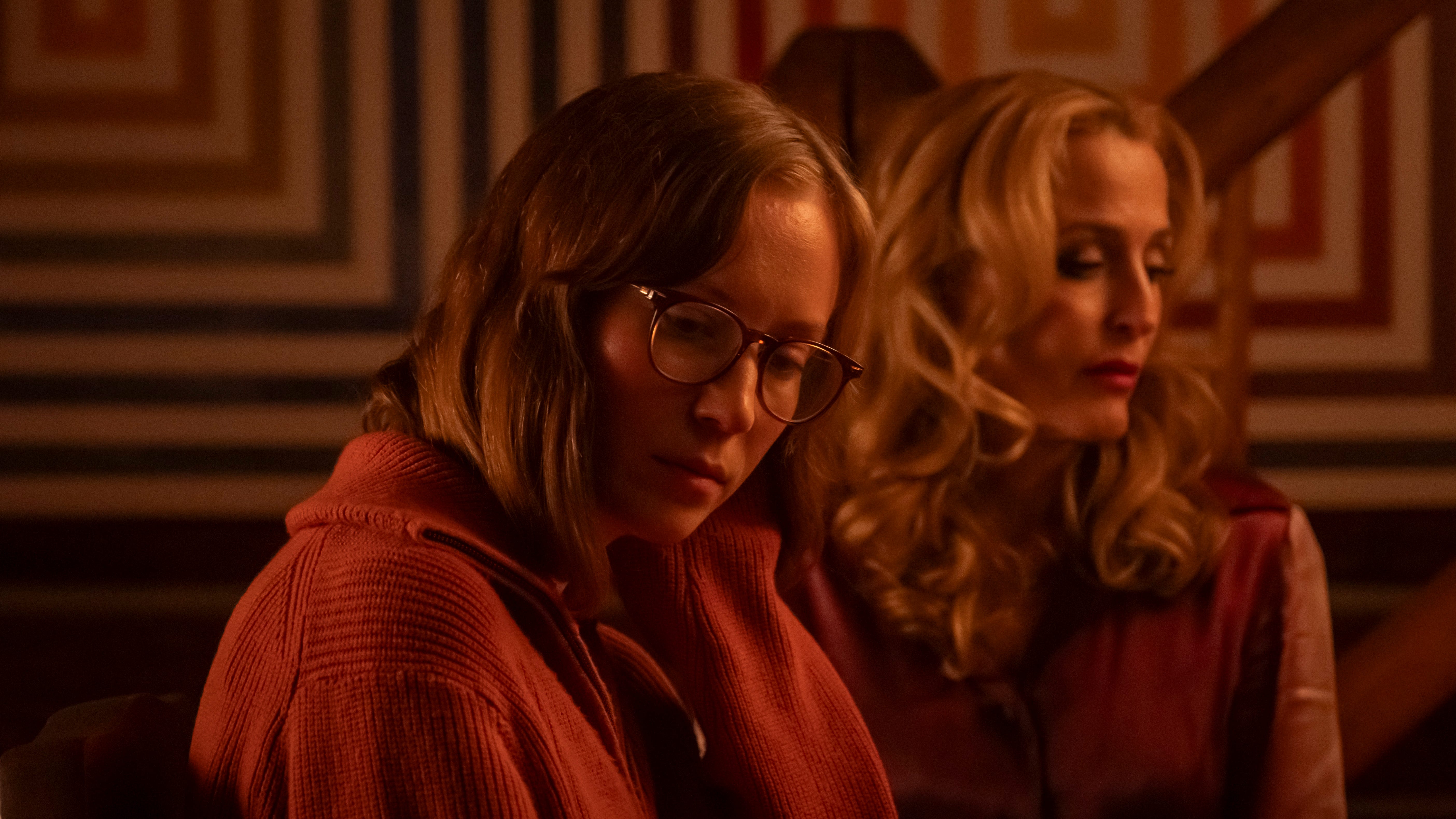
Schoenbrun’s gift for elaborate worldbuilding reaches a new level of abundance with the lovingly crafted lore of “Camp Miasma,” the titular movie-within-a-movie masked killer franchise that, as meticulously detailed in the opening credit sequence, has spawned multiple sequels, spinoffs, bobblehead action figures, New Yorker cartoons, crackpot fan theories, and righteous feminist thinkpieces revolving around the film’s problematic gender non-conforming villain: a slain camper cheekily named Little Death (returning Schoenbrun collaborator Jack Haven), who reemerges from the depths of a watery grave to enact gruesome vengeance against each new generation of libidinous hetero scum.
Paying homage to the notorious trans twist in Sleepaway Camp, Little Death’s origin story is initially framed as crude hyperbole concocted by ignorant straight film bros and douchebag studio execs, playing into Hollywood’s reputation for equating gender deviance with abject terror throughout the annals of cinema. Schoenbrun is interested in the reclamation of these grotesque characterizations, as subsequent generations of queer audiences have found a subversive sanctuary and source of power in empathizing and identifying with these tragic celluloid outcasts. In this sense, the mystical tenacity of “the killer” becomes an ode to the resilience of the other: time and time again, irrespective of plot holes or continuity errors, Little Death rises from the bottom of the frozen lake wearing his trademark (and vaguely clitoral) air conditioning vent over his head (the reason for which is never explained), ready to penetrate a fresh batch of young and nubile camp counselors with his gargantuan phallic spear. “He always comes back” a shellshocked survivor says at the end of every film. “Comes,” for Schoenbrun, being the operative word.
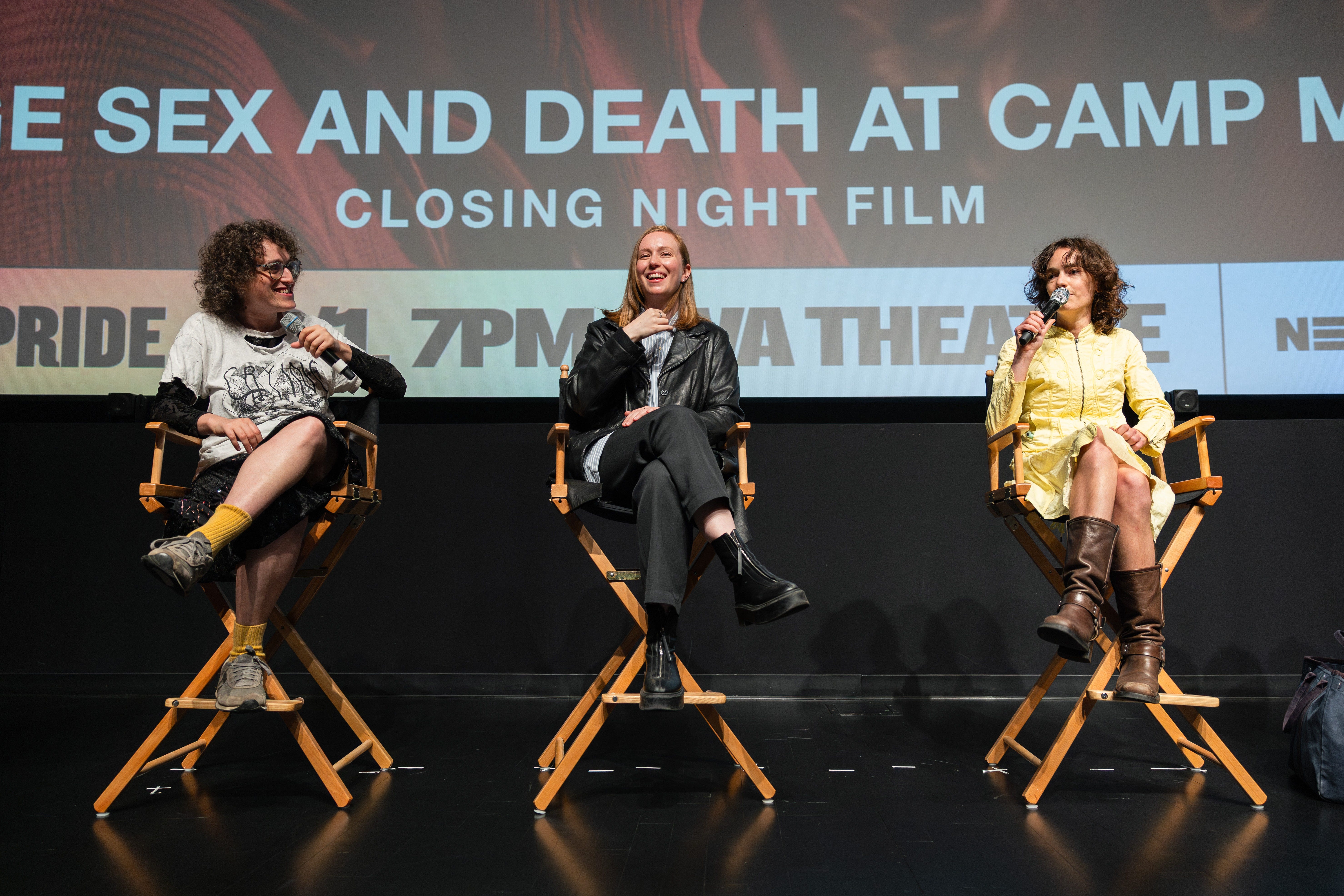
Joined at the NewFest Q&A by lead actress Hannah Einbinder (fresh from the triumphant series finale of her hit television show Hacks), Jack Haven, cinematographer Eric K. Yue, and Co-Producer Willy McGee, Schoenbrun speaks of Einbinder as “an auteur of her own physicality” after witnessing her 2024 standup comedy special Everything Must Go, and how they sought to “pull that physicality out of her in a different way.” “That you did!” Einbinder retorts with a knowing wink. The film centers on the intergenerational kinship/courtship between the up-and-coming queer indie auteur Kris (Einbinder) and the original final girl of the “Camp Miasma” film series, the supernaturally glamorous southern grand dame Billy Presley (a spectacular Gillian Anderson, in a role custom-tailored for spirited devotees of camp faggotry and Mommy-Dommy wish fulfillment, myself included). Kris is tasked with pinkwashing the “zombie IP” of the original film after their deconstructed remake of Psycho “from the perspective of the shower curtain” is a critical success at Sundance (a comic parallel to Schoenbrun’s own career), and seeks inspiration by tracking down the luminous recluse Billy in an effort to persuade her to return for the post-woke “elevated horror” Miasma reboot, after she mysteriously vanished from the public eye many decades ago. To Kris’s surprise and concern, Billy now lives in the remote campgrounds that served as the original Camp Miasma’s set: an insular fantasy space suspended in perpetual fairytale winter, rendered through breathtaking matte paintings of mountainscapes and billowing crystalline snowbanks. Billy has turned part of the camp into a cinema, where she watches a 35mm print of “Camp Miasma” on a loop, often while hypnotically scribbling geometric designs reminiscent of Little Death’s signature headpiece. Kris is immediately enchanted with the older scream queen’s unhinged demeanor and devilish snickering, not to mention her insatiable lust for Kentucky Fried Chicken dipping sauces, but rightfully alarmed when Billy seems to believe that Little Death still lives in a hole at the bottom of the lake “where the movies come from.”


The film snaps, contracts, judders, and spasms in and out of metanarrative devices as Kris and Billy gaze affectionately upon, and eventually reopen, each other’s psychosexual wounds, culminating in a bedroom sequence of jubilant evisceration. Einbinder initially plays Kris as mousy and reserved, a self described pipsqueak who practices polyamory despite considering “their work” their primary partner. Kris is a highly cerebral Judith Butler stan who is ultimately disconnected from any tangible embodiment of their own desire, a word they underline three times while taking notes on their planned prequel. As the film progresses and the frozen lake of “Camp Miasma” begins to thaw, Kris closes in on the nexus of their arousal, transforming into a sort of slutty Velma Dinkley, with a growing urge to play the helpless victim while simultaneously inhabiting the perspective of the killer. Anderson as Billy mentors Kris in the virtues of ultraviolent roleplay and the liberatory potential of consensual non-consent, channeling Norma Desmond as a kinky Honky Tonk Angel, especially in her penchant for ornate turbans and dramatic entrances. Through Billy, Anderson and Schoenbrun rework the demented crone archetype of the resurging Hagsploitation genre into a radiant beacon of erotic wisdom. Onstage at NewFest, Einbinder mentions relating to Kris in unexpected ways around the character’s cycles of shame and mental blockage in regards to sexual gratification, and cites her experience working with Anderson as both nourishing and educational onscreen and off. Einbinder is also quick to mention that Kris’s labrys tattoo is a sly reference to Corky, the fugitive plumber played with immense butch carnality by Gina Gershon in the Wachowski sister’s classic lesbian erotic thriller Bound. Schoenbrun’s extended multiverse is chock full of impish easter eggs and sublime cinephilic surprises that will reward Letterboxd warriors, veteran gorehounds, and Feeld subscribers alike.
For those who survive until dawn, Teenage Sex and Death at Camp Miasma is a gonzo parable about sexual reembodiment through the practice of seeing beyond oneself, a testament to how pop culture mediates desire, and a stunning insight into how queer and trans experiences may differ from conventional notions of linear time, offering for a delightful maze of alternate temporalities, parallel universes, and hidden portals to self-discovery. Through multicolor heaps of sour gummy worms, innumerable hormonal excretions, engorged and ruptured pituitary glands, and cascading torrents of shimmering red plasma, Schoenbrun revels in all of the perverse pleasures of the new flesh. As a reminder to stay present in our bodies, Einbinder instructs the audience to “Please silence all vibrating cock rings and butt plugs before the show.”
Relive the North American Premiere of TEENAGE SEX AND DEATH AT CAMP MIASMA via our photo gallery. TEENAGE SEX AND DEATH AT CAMP MIASMA is in theaters August 7, 2026.
Kerosene Jones is a writer, curator, and interdisciplinary artist interested in horny ghosts with unfinished business. His work across mediums has been supported by Art Omi, BBC Radio 4, MoMA PS1, NYSCA, The Poetry Project, Onassis USA, Visual AIDS, and Wave Farm. His arts and culture writing has appeared in BOMB, Filmmaker Magazine, Document Journal, Interview Magazine, X-TRA, Screen Slate, MUBI Notebook, and Brooklyn Rail. He is the arts editor of WUSSY Magazine and programs manager of CPR – Center for Performance Research.